The Heat Pump Myth: Moving Heat Is Not Making It
Heat pumps move heat rather than create it like a flame. Learn how the cycle works, what the outdoor unit does and what that means for heating.
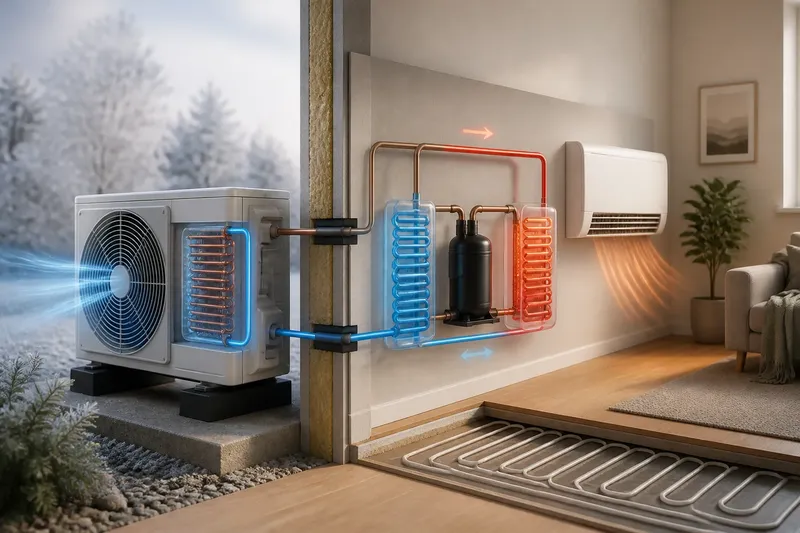
A heat pump moves heat from one place to another; it does not make heat by burning fuel. That distinction explains why a heat pump can warm a room even when its outdoor unit feels cool, and why electricity is needed to run the system rather than to create warmth directly.
Think of the equipment as a heat carrier. It collects thermal energy from outside air, the ground or water, then releases it indoors. The energy in the room comes from both the heat transferred and the electricity that drives the process. A boiler or flame-based heater works differently: it releases heat by burning fuel or converting electricity directly into heat.
What does “moving heat” mean?
Heat naturally flows from a warmer place towards a cooler one. A heat pump uses a circulating refrigerant and a compressor to move heat in the opposite direction, much as a refrigerator carries heat out of its cabinet and releases it into the kitchen.
The refrigerant is chosen to change state at useful temperatures. As it evaporates, it can absorb heat from a relatively cool source. After compression raises its pressure and temperature, it can release heat through a coil inside the building. It then expands and cools before circulating back to collect more heat.
This cycle does not require the outdoor air to feel warm to a person. “Cold” air still contains thermal energy, although extracting it becomes harder as the source temperature falls. In practice, the system’s design and operating conditions matter: a heat pump can transfer heat from a cool source, but it cannot do so without limits.
Why is a heat pump not a flame?
A flame is a source of heat. Combustion changes the fuel into other substances and releases energy, which is then passed to air or water. A heat pump has no flame in its heating cycle. Its compressor and fans use electricity to run the transfer process, while the refrigerant carries heat between the outdoor and indoor coils.
That means the electricity is not simply being turned into room heat as it would be in a resistance heater. It powers the machinery that shifts heat already present in the environment. Some electrical energy also ends up as heat in the system, but that is not the central mechanism.
The distinction is useful when comparing systems. A direct electric heater warms a room by passing current through a heating element. A heat pump uses electrical input to move heat from elsewhere. A fuel boiler creates heat through combustion, then transfers it to water or air. Each has different equipment and energy flows; calling all three “heat-making machines” hides those differences.
What is the outdoor unit doing?
In heating mode, the outdoor coil acts as a heat collector. Air passes over it, and the refrigerant absorbs some of its heat. The outdoor fan helps move air across the coil, while the compressor maintains the conditions needed for heat to travel through the system.
The coil may be cooler than the air around it because heat is flowing into the refrigerant. That can encourage moisture in the air to condense or freeze on the coil. A heat pump can periodically reverse part of its cycle to clear frost; during that process, its heating behaviour may briefly change. Frost handling is a normal part of operation, not evidence that the system has started creating heat by some other means.
The indoor unit does the other half of the job. Its coil receives hotter refrigerant and transfers heat to room air or a water circuit. With an air-source system, the outdoor and indoor units are connected by refrigerant pipework. A ground-source system instead gathers heat through a ground loop, but the basic idea—collect heat, raise its temperature and deliver it indoors—remains similar.
What should you expect from the heat pump cycle?
A heat pump’s output depends on the temperature difference between its heat source and the temperature it must deliver. When the source is milder and the required indoor-water temperature is moderate, moving heat is generally easier. A colder source or a hotter delivery target asks the system to work harder.
This is why system design and controls matter alongside the machine itself. A heat pump serving underfloor heating or generously sized radiators may be able to circulate water at a lower temperature than a system relying on small radiators designed for a boiler. That does not mean every home needs a particular emitter; it means the heat pump and the distribution system need to suit one another.
Say you replace a boiler in a draughty cottage but keep the existing controls and assume the new unit should behave exactly like the old one. The rooms may warm more slowly than expected, especially if the heat pump is set to run steadily at a lower water temperature. Adjusting the controls to suit the system and addressing obvious draughts could make the heating feel more consistent; the observable result would be steadier room temperatures, not a flame-like burst of heat.
What is not worth the effort is judging the whole system by touching the outdoor unit or expecting its indoor vents to feel as hot as a boiler radiator. Those sensations are poor measures of how much heat is being transferred. Look instead at whether the home reaches the temperatures you need and whether the controls and schedules match how you use it.
How do heat pumps work in everyday situations?
Can a heat pump work when it is cold outside?
Yes. It can extract heat from cold outdoor air, though a lower source temperature makes the transfer more demanding. The system’s suitable operating range and performance depend on its design and the conditions it faces.
Does the outdoor unit make cold air?
It does not make cold as a separate product; air passing over the coil can leave cooler because heat has moved into the refrigerant. The fan then disperses that air around the unit.
Does a heat pump create any heat at all?
It delivers heat indoors, but its main function is to transfer heat from a source rather than produce it through combustion. The electricity used by the compressor and fans also contributes some heat as it is consumed.
Can a heat pump provide cooling?
Many systems can reverse the refrigerant cycle and carry heat from indoors to outside. The unit and controls must support cooling, and the way indoor heat is distributed affects how useful that mode will be.
Which details should you check before comparing systems?
Compare the heat pump as part of a whole heating arrangement, not as an isolated box. Useful points to ask about include:
- Heat source: Is the system drawing heat from air, ground or water, and does that suit the site?
- Heat distribution: Will it serve radiators, underfloor pipework, warm air or a combination?
- Water temperature: What delivery temperature is expected in ordinary use, and how does that fit the existing emitters?
- Controls: Are the programmer and thermostat configured for the heat pump’s operating pattern?
- Hot water: How does the system heat the cylinder, and when is that cycle scheduled?
- Frost management: How does the outdoor unit handle frost and condensate at the property?
Equipment instructions, installer design and local requirements can affect the right settings and installation choices, so use those details rather than copying advice intended for another system. For a household decision, ask the installer to explain the heat source, delivery temperature and controls in plain language. Those answers reveal whether the proposed setup is designed to move heat effectively into the rooms you actually use.
When someone says a heat pump “makes heat”, the useful correction is not that it produces no warmth. It delivers warmth by moving it. Remember that distinction when assessing the outdoor unit, setting expectations for room temperature or comparing heat pumps with a flame-based boiler: the heat has a source, and the machine’s job is to carry it where it is needed.